If there’s one 4×4 that has earned its reputation the hard way in Middle East dunes, it’s the Land Cruiser 200 with the 5.7L V8. This isn’t a fashion SUV. It’s a heavy-duty, ladder-frame, full-size 4WD that has spent over a decade being abused in heat, sand, long convoys, family duty, and weekend punishment — then doing it again the next weekend.
01 Who It’s For
This is the platform for the driver who needs one vehicle that has to do everything. Daily commuter on Monday. Family hauler on Wednesday. Liwa convoy on Friday. The LC200 is the rare full-size 4×4 that can be built into an extreme-capable desert machine while staying dependable enough to genuinely daily-drive.
On paper it’s big and heavy. In real life, that’s exactly why it works: rigid chassis, long wheelbase stability, serious cooling capacity, and a drivetrain that doesn’t feel fragile when the sand is soft, the day is hot, and the pace is high.
02 The Spec That Matters for Dunes
Forget the brochure stat sheet. Here’s what actually matters when this vehicle hits the sand:
- 5.7L naturally aspirated V8 — 362 bhp, 530 Nm. NA torque delivery is smooth and predictable, less spiky than a boosted engine, and it doesn’t sulk in heat.
- 138L fuel tank — this matters more than people admit. Long-distance desert touring without anxiety.
- Full-time 4WD with low range — the centre diff is always working. No hubs to lock, no transfer case decisions.
- ~5.0 m long, ~2.85–2.95 m wheelbase — long wheelbase is half of why it tracks straight at speed in the chop.
- Trim levels (EXR / GXR / VXR) — exact spec differences matter less than the platform itself for desert builds. They’re all 3UR-FE underneath.
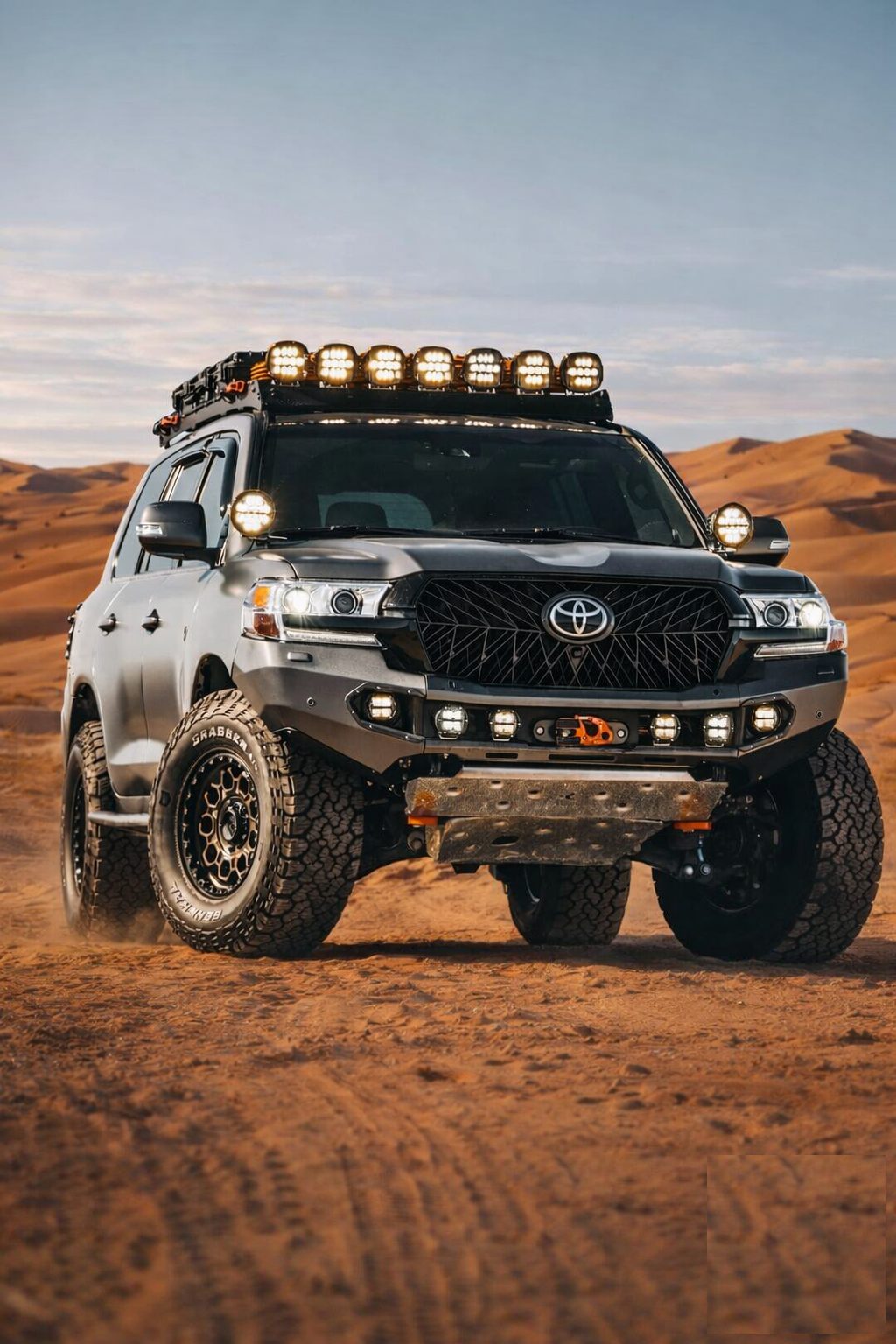
03 Why It Belongs on the Extreme Desert List
It’s time-tested in GCC heat and sand
A lot of vehicles feel capable until they’re repeatedly exposed to the exact torture that Middle East dunes deliver: heat soak, long climbs, high-RPM sand pulls, repeated recoveries, and constant suspension cycling. The LC200 is one of those platforms that has already proven — over years, not weekends — that it can survive sustained desert use without becoming a project car.
It’s naturally stable at speed
The long wheelbase and wide stance help it track straight, especially across broken sand, choppy bowls, and high-speed transitions where lighter 4x4s start to feel nervous. It’s not a dart. It’s a freight train with steering — and that predictability is a safety feature when you’re cresting and correcting at pace.
The aftermarket is deep, but the build order matters
The LC200 has one of the deepest aftermarkets globally. But the smart approach isn’t to bolt everything on at once. The smart approach is sequenced: suspension → tyres → cooling confidence → drivability → then power. Get the chassis controlled and stable first; the rest becomes easier and safer.
The LC200 scores 26/30 — one point shy of the five-way tie at 27/30 (Y61, FJ, Y60, Prado J120 SWB, LC70 SWB). The single point it loses is Mod Potential (4/5 vs 5/5). The reason is the same one Phil has been pointing at for years: it’s heavy. While the aftermarket is enormous, the Y61’s solid-axle simplicity and the SWB Toyotas’ compact footprints make them a tick easier to push to long-travel competition builds. The LC200’s weight isn’t a fault — it’s the trade-off you make for the rest of what this platform delivers.
04 The Hard-Earned Opinion — Suspension First, Always
If you remember one thing from this write-up, make it this: The suspension system matters most.
Not power. Not exhaust. Not the look. Not the badge. Not even the tyres — until the suspension is doing its job.
The LC200 can be deceptively fast in dunes, but when it’s being pushed hard, the platform needs control:
- Better damping so it doesn’t pogo after a crest
- Better heat handling in the shocks so performance doesn’t fade mid-session
- Better compliance so it doesn’t bottom out harshly
- Better balance so the vehicle doesn’t buck when it gets unsettled
A properly set up suspension transforms the LC200 from capable into seriously confident. Same platform, same engine, completely different driving experience.
05 What It’s Like in Extreme Dunes
The Good
- Effortless torque delivery. NA V8 torque is smooth, predictable, and far less spiky than boosted setups.
- Less stress on the engine. Tall dune climbs feel less desperate compared to smaller engines working harder.
- Stability when it matters. Ruts, chop, cross-wind crests — this platform stays composed.
The LC200 is not light. That means it needs more suspension control when driven aggressively. It will punish weak setups faster than a smaller vehicle would. And it demands respect in angled descents and sudden direction changes, because momentum is real.
Engine power doesn’t cancel weight — it just hides it until something breaks.
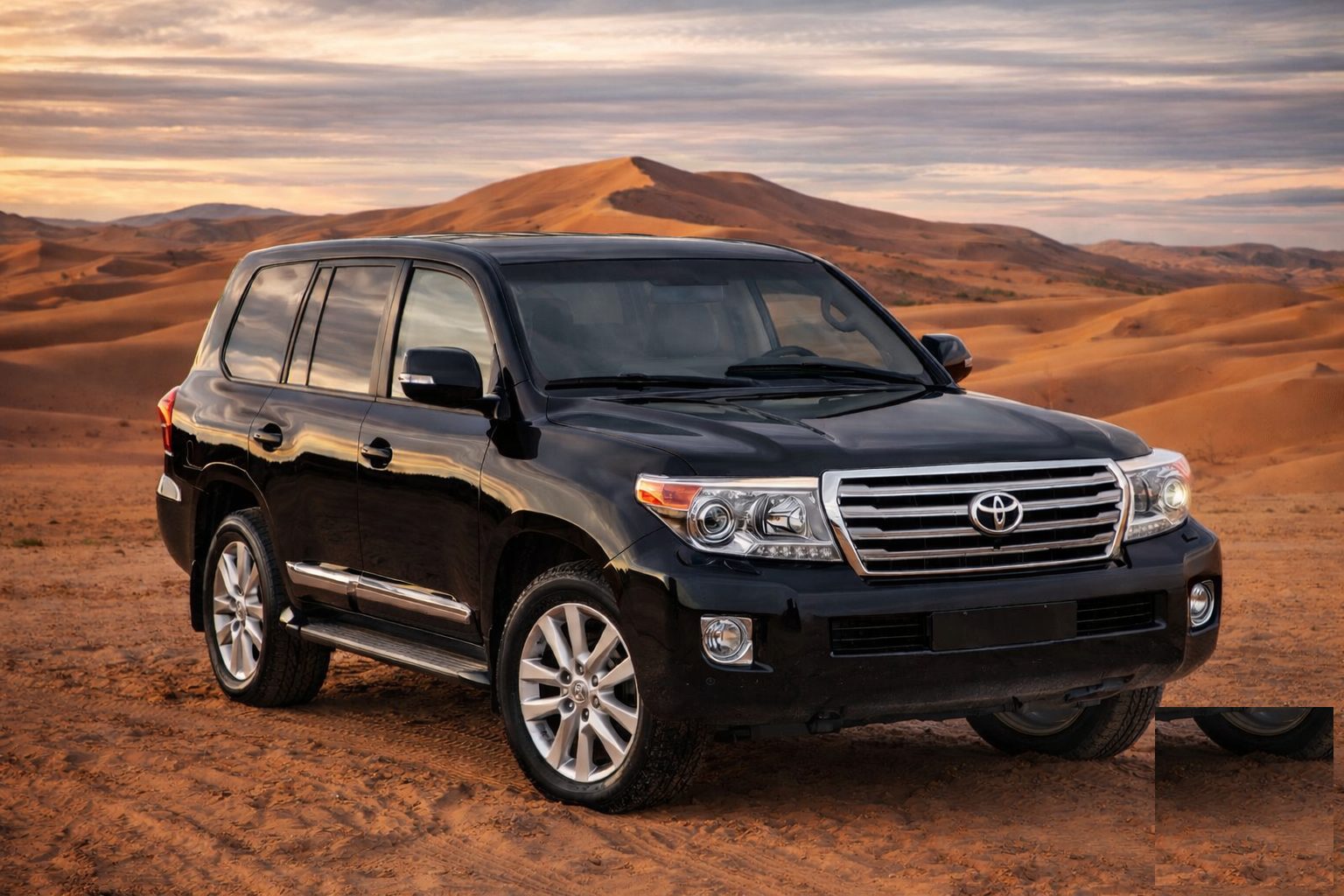
06 Power-to-Weight and Why Light Builds Win
The LC200 responds unbelievably well when you keep it sensible. If your goal is speed and agility, avoid turning it into an overlanding billboard — heavy bumpers, racks, drawers, steel everything. In dunes, gravity and weight are your biggest enemies. Keeping the build clean means:
- Easier climbs with less run-up
- Less heat in the drivetrain
- Less punishment on shocks and bushings
- Better ability to change your line mid-climb when the dune suddenly “goes wrong”
You can absolutely build this platform into a beast — just don’t build it into a heavyweight.
07 Why It Still Matters
The LC200 5.7L is one of the most credible “do everything” desert platforms ever sold in this region. It’s not the newest. It’s not the lightest. It’s not the most dramatic. But in the Middle East, where dunes are basically a suspension torture test, this is one of the vehicles that has already proven what survives.
If you want a full-size 4×4 that can take repeated punishment, stay reliable, carry serious fuel, and still be built into an extreme desert machine with the right suspension — this is it.