If you want a desert 4×4 that’s hard to kill, easy to live with, and insanely buildable — the Toyota FJ Cruiser is one of the strongest “buy used, build smart” choices we can recommend in the GCC. It hits a sweet spot almost nothing else does: Toyota reliability, proper desert ability, and one of the deepest aftermarkets in the region.
01 Why It’s a Moterr Favorite
The FJ sits in a rare sweet spot: Toyota reliability + proper desert ability + a massive aftermarket ecosystem. In the Middle East, that combination matters because the desert doesn’t just test capability — it tests endurance. Anything fragile will tell you about itself fast, usually in the worst possible place.
The FJ has been doing exactly this without drama for over a decade. It’s the smart-money platform.
02 What It Comes With (Factory Baseline)
From the Moterr database, the FJ Cruiser (2012+) consistently arrives with:
- 4.0L V6 petrol — the legendary 1GR-FE
- 270–275 bhp · 380 Nm — modest on paper, plenty in practice
- Mostly automatic transmission, with a few manual examples
- 5 seats in a body-on-frame package
- Part-time 4WD with low range — proper off-road-ready, not a soft-roader system
Even stock, you’re starting with a strong engine and drivetrain package that handles sand well — especially once the basics (tyres + pressures + driver skill) are dialled.
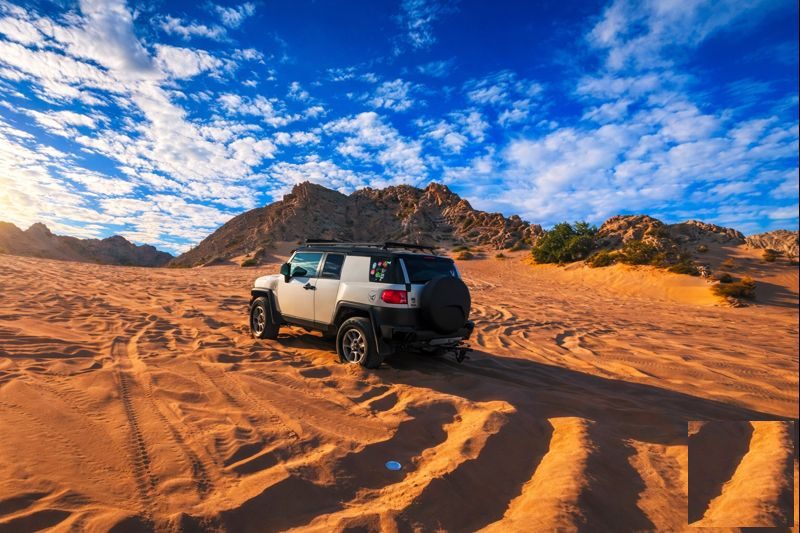
03 Legendary Toyota Reliability — Why It Matters in Desert
Toyota’s reputation isn’t hype. People love Toyota platforms because they tend to be predictable, durable, less dramatic about heat and abuse (when properly maintained), and easier to keep running long-term than most alternatives.
For a used-car desert build, reliability isn’t a “nice to have.” It’s the difference between a fun weekend and an expensive recovery mission an hour from the nearest workshop.
The FJ ties at 27/30 with Y61, Y60, Prado J120 SWB, and LC70 SWB. Same six-criteria total. Where it differentiates from the others is the combination of Toyota reliability discipline, GCC dealer ubiquity, and used-market pricing — making it the platform we point to when “performance per dirham” is the real question. You get into the top tier for less money, and you spend the difference on the suspension build that actually matters.
04 The Upgrade Ecosystem — Same League as Y61, Sometimes Deeper
Here’s where the FJ becomes a serious weapon: the upgrade ecosystem is enormous — suspension, control, durability, and power. In many markets the FJ aftermarket is as deep as the Y61’s, sometimes deeper, because of how widely Toyota platforms are supported globally.
What that means in the real world:
- You can build it mild, balanced, and daily-drivable
- You can go aggressive and turn it into a dune-focused rig
- Parts availability and community knowledge make it easier to get it right without endless trial-and-error
05 The Trade-Offs (Keep It Real)
Not everyone loves the visibility or the shape. It’s part of the character, but it’s not a “modern SUV” experience. It’s not built to be a luxury cruiser — it’s built to be tough. And like any used off-road vehicle, condition matters. A badly maintained FJ can cost you time and money.
Let’s not pretend: the rear doors are the FJ’s biggest everyday compromise. They’re the half-door style that can only be opened after the front doors are opened first. If you carry passengers often or want easy rear access daily, that’s something you should know before buying. Some people don’t care. Some people hate it. Be honest with yourself before signing.
06 The Value Play — Performance Per Dirham
This is where the FJ is quietly deadly. If you start with a good used FJ and upgrade it correctly, it can become very difficult to beat for the money:
- The base vehicle is affordable versus newer 4x4s
- The platform accepts upgrades exceptionally well
- The reliability keeps long-term costs down
- You can reach serious performance without spending “new car money”
Performance per dirham can be exceptional when the build is planned properly. That’s the case for the FJ in three sentences.
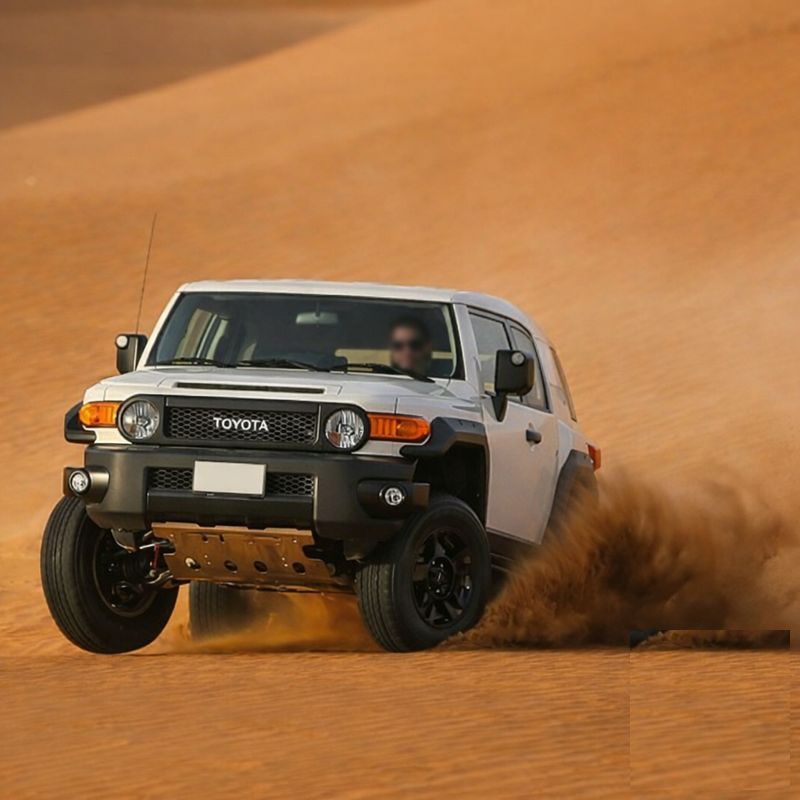
07 The Moterr Build Approach
We’re not fans of random mod lists. We build around use-case:
1. Suspension matched to your driving style and load — not just a lift. Get geometry right before chasing height.
2. Tyres and correct pressure habits — this changes everything in sand. See the Definitive Desert Tyre Guide.
3. Protection and recovery basics — street-legal, safe, reliable.
Then you decide whether to push toward durability, comfort, speed control, or power. The platform handles all four — but only if the foundation is right.